Unmanned Security Systems: Border Control-Level Verification for Critical Infrastructure
Published
14.10.2025
Reading Time
x
minute(s)
.webp)
Contents
Key Takeaways
- Unmanned security systems verify 7,400+ ID document types from 196 countries, detecting machine-readable security features invisible to human inspection
- Processing time reduces to under 30 seconds while maintaining consistent accuracy across all shifts and enhancing security operations
- Biometric face matching with 3D liveness detection and advanced sensors prevents spoofing attacks that succeed in visual inspections
- Real-time sanctions screening ensures comprehensive compliance and threat detection
- German data centers with BSI certification guarantee GDPR compliance and data sovereignty
Discover how essentry delivers border control-level security →
Beyond 24/7 Coverage: The Real Security Enhancement
Critical infrastructure facilities already maintain round-the-clock human security teams. The advancement unmanned security systems bring isn't about extending hours—it's about detecting sophisticated threats invisible to human inspection while dramatically improving process efficiency and situational awareness.
Modern identity documents contain over thirty machine-readable security features, from cryptographic chips to micro-printing below human vision thresholds. According to the BSI IT Security Situation Report 2024, identity fraud incidents in critical infrastructure increased 47% in 2024, with most involving forgeries that passed visual inspection but contained machine-detectable anomalies. This capability gap makes unmanned security systems essential for genuine security and intruder detection.
However, these advanced security capabilities only deliver value through comprehensive process automation. Without automated workflows orchestrating every step from visitor invitation to departure, even the most sophisticated biometric scanner becomes merely another manual checkpoint tool. Process automation transforms isolated security features into an intelligent, self-operating system that maintains continuous vigilance without human intervention.
Machine-Readable Security: The Invisible Layer
Automated Workflow Integration
Before examining specific security features, it's crucial to understand that unmanned security systems operate through fully automated workflows with minimal human intervention. From the moment a visitor's invitation is created, process automation handles scheduling, pre-screening, credential preparation, and access provisioning. When the visitor arrives, these pre-configured processes execute seamlessly— ID document verification, biometric enrollment, and access activation
Authentication
Biometric identity documents such as passports, ID cards, driver's licenses, and residence permits contain embedded chips with PKI certificates based on RSA-2048 or ECDSA algorithms (ICAO Document 9303). These create mathematical proofs of authenticity requiring computational verification. Unmanned security systems validate these signatures instantly and detect anomalies, while human inspection cannot access this critical security layer at all.
The authentication stack includes Basic Access Control preventing unauthorized reading, Passive Authentication verifying data integrity, Active Authentication confirming chip genuineness, and Extended Access Control protecting biometric data. Without automated verification using advanced sensors and anomaly detection technology, these defenses remain completely inaccessible.
Optical Security Beyond Human Vision
According to the European Commission's PRADO database, unmanned security systems detect features specifically engineered to exceed human capabilities:
- Micro-printing at 0.2mm (below 0.4mm human threshold)
- UV-fluorescent patterns visible only at 365nm wavelength
- Infrared-transparent windows with hidden data
- Metameric inks appearing different under specific wavelengths
- Optically Variable Ink changing at precise angles
These elements create multi-layered authentication that unmanned security systems with specialized sensors evaluate simultaneously within seconds—
Process Efficiency Through Intelligent Automation
Traditional verification at critical facilities and restricted areas requires sequential steps: visual document inspection, manual data entry, database checks, and physical badge creation—each prone to delays and errors.
The fundamental shift with unmanned security systems isn't merely speed—it's the complete automation of decision-making processes that enhance situational awareness. Every verification triggers predetermined workflows: approved visitors automatically receive access rights, suspicious documents instantly alert security teams for threat assessment, and compliance reports are generated without human intervention. This process automation ensures that security protocols execute consistently whether it's Monday morning or Saturday night.
Unmanned security systems perform a streamlined verification process where OCR scanning, cryptographic verification, biometric matching, and sanctions screening occur in quick succession.
Addressing Germany's Security Workforce Crisis
In Germany, the security industry faces a significant labor shortage. According to the Bundesverband der Sicherheitswirtschaft (BDSW) 2024 Report, 83% of security companies report persistent vacancies, with approximately 12,000 unfilled positions nationwide and average recruitment times of 168 days.
essentry's managed service approach provides complete system management including 24/7 technical support, regular updates, compliance reporting, and optimization. This eliminates the need for internal biometric expertise while existing security teams focus on high-value security tasks.
Implementation Strategy
Implementation succeeds by establishing process automation as the foundation, not adding security technology to manual procedures. Each phase builds automated workflows that eliminate human touchpoints while maintaining security oversight and seamless integration with existing systems.
Phase 1: Assessment (2-4 weeks)
Document current processes, identify security gaps, calculate baselines, engage stakeholders.
Phase 2: Pilot (4-8 weeks)
Deploy at single entry point, train personnel, measure performance, gather feedback on system integration.
Phase 3: Rollout (8-12 weeks)
Expand systematically to restricted areas, complete seamless integration, activate compliance features, optimize workflows for threat detection.
Return on Investment
Organizations implementing automated visitor management with unmanned security systems typically achieve significant operational benefits:
- Substantial reduction in checkpoint staffing needs
- Faster visitor processing times with enhanced security
- Reduced compliance reporting effort
- Potential insurance premium reductions through improved security documentation and threat monitoring
Future-Proofing Security Infrastructure
Upcoming regulations reinforce unmanned security systems' importance:
In the European Union, upcoming regulations highlight the growing importance of unmanned security systems:
- The EU Digital Identity Framework (2025) requires advanced verification technologies
- Enhanced NIS-2 obligations mandate continuous monitoring
- The AI Act will regulate biometric systems
- Cross-border standards demand interoperable verification
Next-generation security capabilities include behavioral biometrics, AI threat prediction with anomaly detection, audit trails, and quantum-resistant encryption.
Conclusion
Unmanned security systems don't replace 24/7 human presence—they automate and enhance it through continuous, rule-based verification that extends beyond human capabilities while improving threat detection and situational awareness.
Process automation is what transforms these security capabilities from impressive specifications into operational reality. The system's ability to maintain perfect consistency across thousands of daily verifications, instantly update access rights based on threat levels, and generate compliance documentation without human intervention—these outcomes only exist because every process runs through automated workflows designed for zero-touch operation.
By detecting machine-readable features with specialized sensors, verifying authentication, performing anomaly detection, and maintaining absolute consistency, these security systems address vulnerabilities manual processes cannot overcome while providing seamless integration with existing infrastructure.
Shortages and increasingly sophisticated forgeries representing potential threats, implementing unmanned security systems becomes essential for protecting restricted areas and maintaining security.
FAQs
These security systems handle technical document verification, biometric matching, and sanctions screening—tasks requiring computational precision and sensors. Security professionals focus on behavioral assessment, threat evaluation, and monitoring situations where human judgment excels, reducing unnecessary human intervention while maintaining situational awareness.
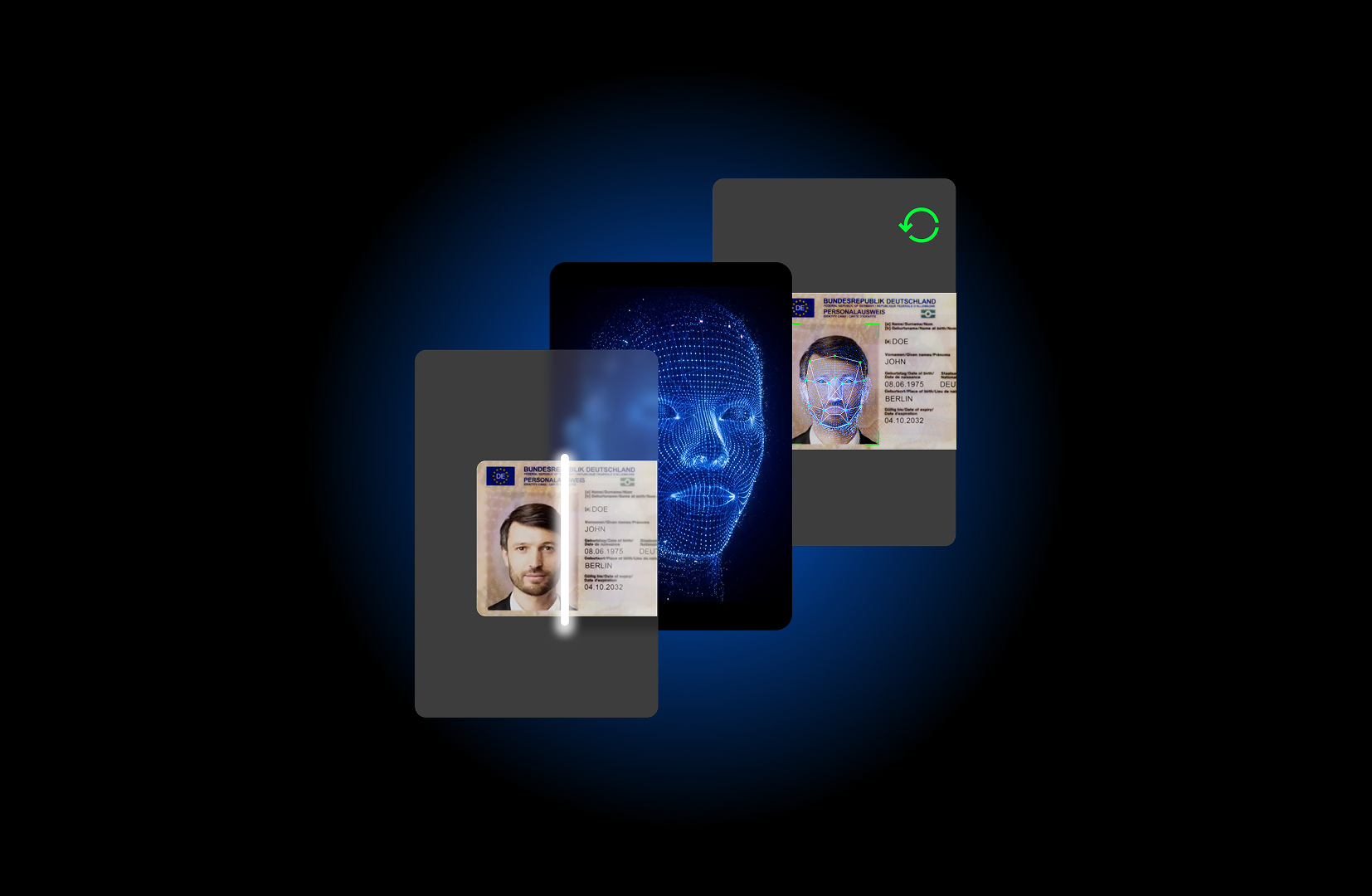
They verify 7,400+ ID document types from 196 countries, detect signatures and micro-printing invisible to humans using advanced sensors and anomaly detection technology, and process visitors through a complete three-step verification process—ID document verification, liveness detection, and biometric face matching.
Depending on facility size and visitor volume, organizations can realize ROI through reduced staffing needs, faster processing times, enhanced security monitoring, and compliance efficiency. The managed service model eliminates internal IT requirements and ongoing maintenance costs, accelerating the return period.
Redundant components, offline capabilities, and manual override procedures ensure continuity of security operations without compromising threat detection.
Through privacy-by-design: biometric templates instead of images, automatic deletion, encryption, German-only data processing, seamless integration with compliance frameworks, and complete audit trails for monitoring and security documentation.
Share this article